Review-based diagnosis of repeated-use difficulties
So I would test a compact logging view before assuming users just need time to adapt.
MyFitnessPal · Independent UX research · AI-enabled · automated review analysis → design diagnosis → prototype test plan
Competing explanations for redesign complaints
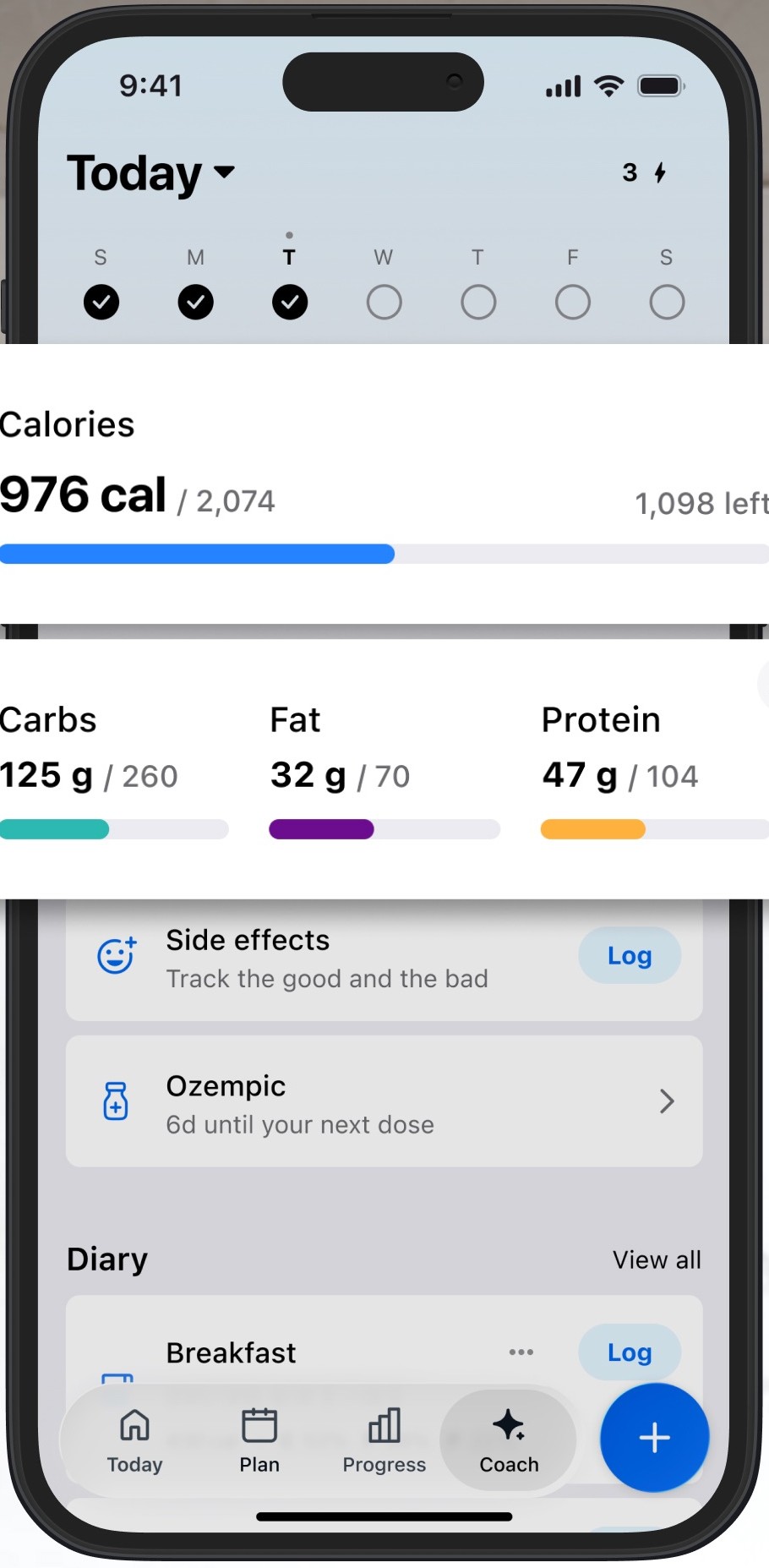
In April 2026 MyFitnessPal replaced its long-standing Diary with a new Today screen, and complaints spiked. The analysis distinguishes complaints about adapting to unfamiliar controls from complaints about additional actions or unavailable functions.
Learning-related difficulty
May respond to practice or guidance
Repeated-use design cost
Motivates testing a change to the interaction
App-store review corpus and temporal samples
English-language Google Play reviews per week
Bars: reviews per week. Labels: share of a random 100 reviews per period about the redesign or an interface change.
Diagnostic, not a population estimate
Review participation is self-selected, and dissatisfied users may be more likely to post. The reviews document reported difficulties but cannot establish their prevalence among all users.
Collecting 9,200 reviews and coding 950
9,200 reviews
Google Play and App Store, Dec 2025 to Oct 2026
Eric
Research decision
Distinguishing learning-related complaints from repeated-use interaction costs
Eric, AI-assisted
Sampling and coding framework
Random samples for complaint frequency among Google Play reviews, enriched samples for identifying and examining problem types. Coding categories specified before analysis.
Automated (Claude)
Independent coding and resolution
Two models code 950 reviews. A third resolves disagreements by rule.
Second AI check (GPT)
Evidence check
Caught the screened sample. Central result moved to the random sample.
Eric
Inference and recommendation
What the evidence supports, what to prototype, what to test next.
Reported problems
1
2
4App Store listing image of the current Today screen. Callouts locate reviewers' complaints. Removed functions (3) are not visible here.
The complaints converge on one repeated-logging need: see the day quickly and make common edits with few steps.
Percentages: share of negative redesign reviews in the larger content sample, Apr 20 to Oct 6 (n = ). mention years of use.
Design cost versus learning curve
Learning-related complaints may diminish as users gain experience with the redesigned interface. Complaints about additional required actions or unavailable functions may persist despite familiarity. Review timing can distinguish these explanations only imperfectly because individual exposure histories are unknown.
Random sample: complaints that name a specific design cause
A complaint can include both. The larger content sample shows the same pattern (appendix).
Product implication. Do not rely on habituation as the default response. Test a more compact logging path.
Coding decision. Accidental copies remained classified as learning-curve complaints under the original codebook. Their appearance in later reviews is also consistent with a possible control-placement problem. Because exposure duration is unknown, the later reports do not rule out learning-related explanations. I retained the original category and reported the alternative interpretation separately.
Limits of review evidence
Can conclude
Complaints that name a specific cause are dominated by design costs in repeated logging, from the launch period on.
Cannot conclude
Those unknowns define the next study.
Proposed changes
Design mock. Illustrative food and numbers.
Design hypothesis, not a validated improvement: an optional compact mode may reduce navigation and increase visible information without compromising comprehension.
Comparative usability study and behavioral analysis
Usability benchmark with established loggers
People with 2+ years of use who log 5+ days a week. Each uses the current design and the prototype. Alternate which they see first.
| Task | Why this task |
|---|---|
| Check everything logged today | Glance, navigation |
| Find calories remaining after exercise | Budget |
| Copy yesterday's breakfast | Removed functions |
| Delete or move items | Removed functions |
| Open a previous meal without copying it | Accidental copies |
Measures: time, taps, errors, accidental copies, how easy each task felt.
Product data, in parallel
If the product records when each user received the redesign: compare each user's logging before and after their own change date, with attention to long-tenure users, and account for baseline trends and other changes around the rollout.
Decision this study supports
If the compact view improves the tasks without comprehension costs, offer it to frequent loggers. If it offers no advantage, reconsider the design, not conclude that reviewers needed more time. The usability result and the logging result answer different questions.
Separate outcomes: task effort and comprehension in the comparative usability study, and changes in logging behavior in product telemetry.
Appendix
Share of all reviews about the redesign (random sample)
100 Google Play reviews per period. 95% Wilson intervals. Exposure timing unknown.
Design cost vs learning curve by period (larger content sample)
Among complaints naming a cause. Codebook labels: structural, relearnable. 95% Wilson intervals.
Two-coder agreement, 950 reviews, before adjudication
Coders: Sonnet and Haiku. Adjudicator: Opus. Pipeline: tools/pipeline.py. Content sample = random sample plus 70 keyword-screened reviews per period from March, at least 10 words each.