Protocol revisions from synthetic rehearsal
Synthetic participants ran the real prototype. The protocol changed in ten places, including a task that pointed people to the answer.
MyFitnessPal compact day view · usability study design and AI-assisted rehearsal · follows the review study
Basis in the diary-redesign review analysis
Public reviews of the diary redesign pointed to design costs in repeated logging. The next step was a usability test of a compact day view with established loggers. This case designs that study and tests it before it runs.
Comparative usability study objectives
| Research question | Hypothesis | From the review analysis |
|---|---|---|
| Daily review time and interaction effort | Less effort and time in B | Day not visible at a glance |
| Accuracy of remaining-calorie interpretation | Higher accuracy in B | Budget harder to inspect |
| Copying and moving task performance | Fewer taps, higher success in B | Removed or narrowed functions |
| Frequency of unintended copying | Fewer unintended copies in B | Accidental "same as yesterday" |
| Comprehension under increased information density | Guardrail: any drop blocks the change | Risk of the fix itself |
Study design


Tasks and measures
| # | Task as rehearsed (v1) | Tests |
|---|---|---|
| T1 | Say what you logged for lunch and its calories | Glance, navigation |
| T2 | "You exercised and logged it." How many calories are left? | Budget |
| T3 | Copy yesterday's breakfast into today | Copy |
| T4 | The item at lunch was a snack. "Put it under Snacks." | Move |
| T5 | Check yesterday's dinner without changing anything | Accidental copies |
Logged on every tap
Derived automatically
The moderator watches the person instead of counting taps.
Rehearsal before recruiting
Eric, AI-assisted
8 synthetic participants
Planted traits, with predictions written before any session. One control.
Claude agents
80 task runs planned, 60 completed
Agents operated the screen representation, selected controls, and supplied responses. Interactions were logged.
Automatic
Scoring
Success, effort, unintended changes, predictions tested.
Separate model
Synthesis
Usability issues and protocol problems proposed.
Eric
Adjudication
Which problems are real, and what changes.
Trusts the first number · Condition A · budget task
Same participant · Condition B
Protocol defects identified in agent rehearsal
Rehearsal evidence · tests the study, not users
Tasks that can separate the designs
Limits of the rehearsal
Problems in the study design
Verification of automated review findings
Rejected findings and supporting evidence
Protocol v2: ten changes. The four that matter most:
Plus six scoring, recovery, and observation changes (appendix and protocol/CHANGES.md).
Shortest established interaction routes by prototype
| Task (rehearsal success rule) | Today | Compact |
|---|---|---|
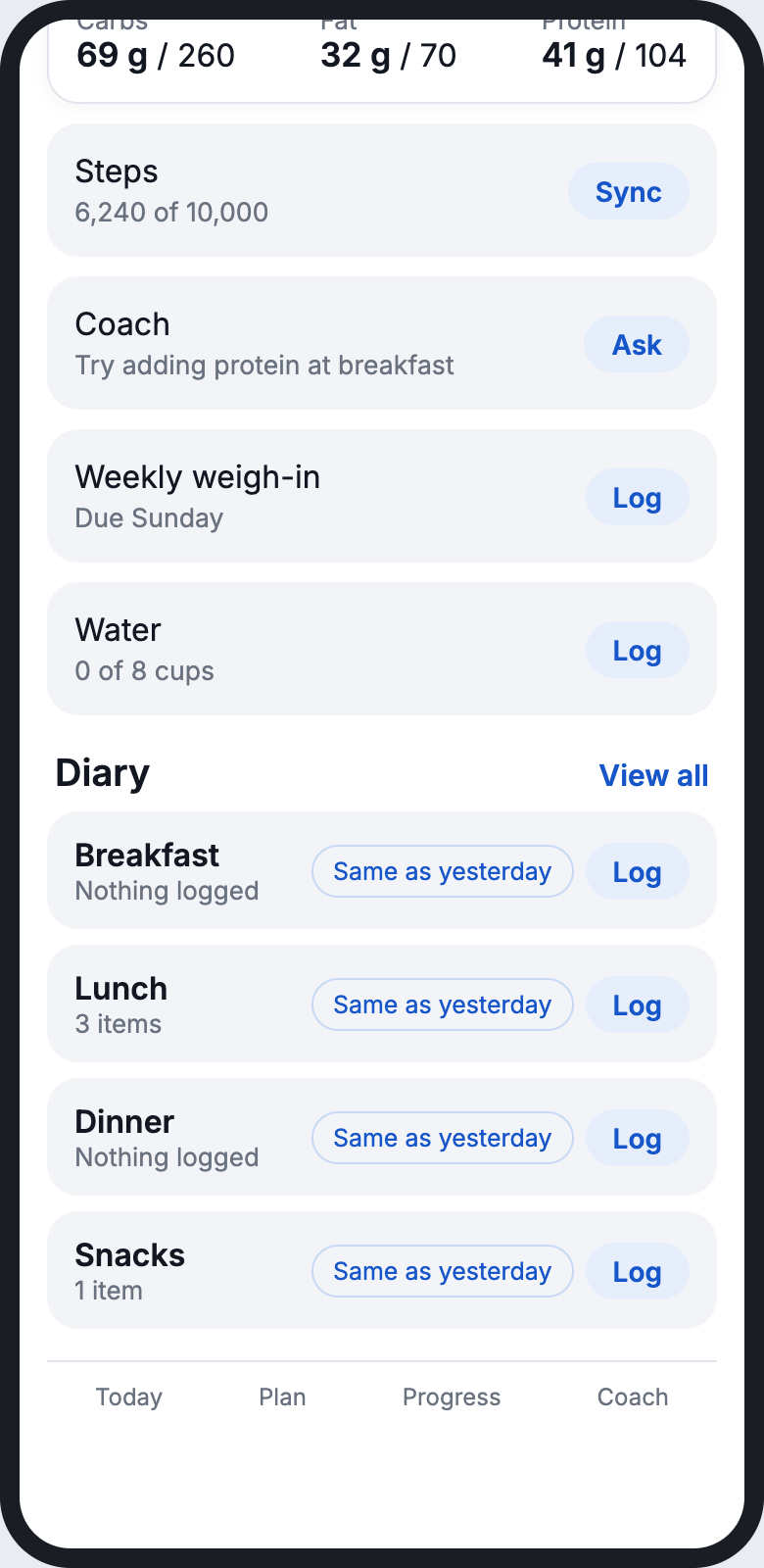
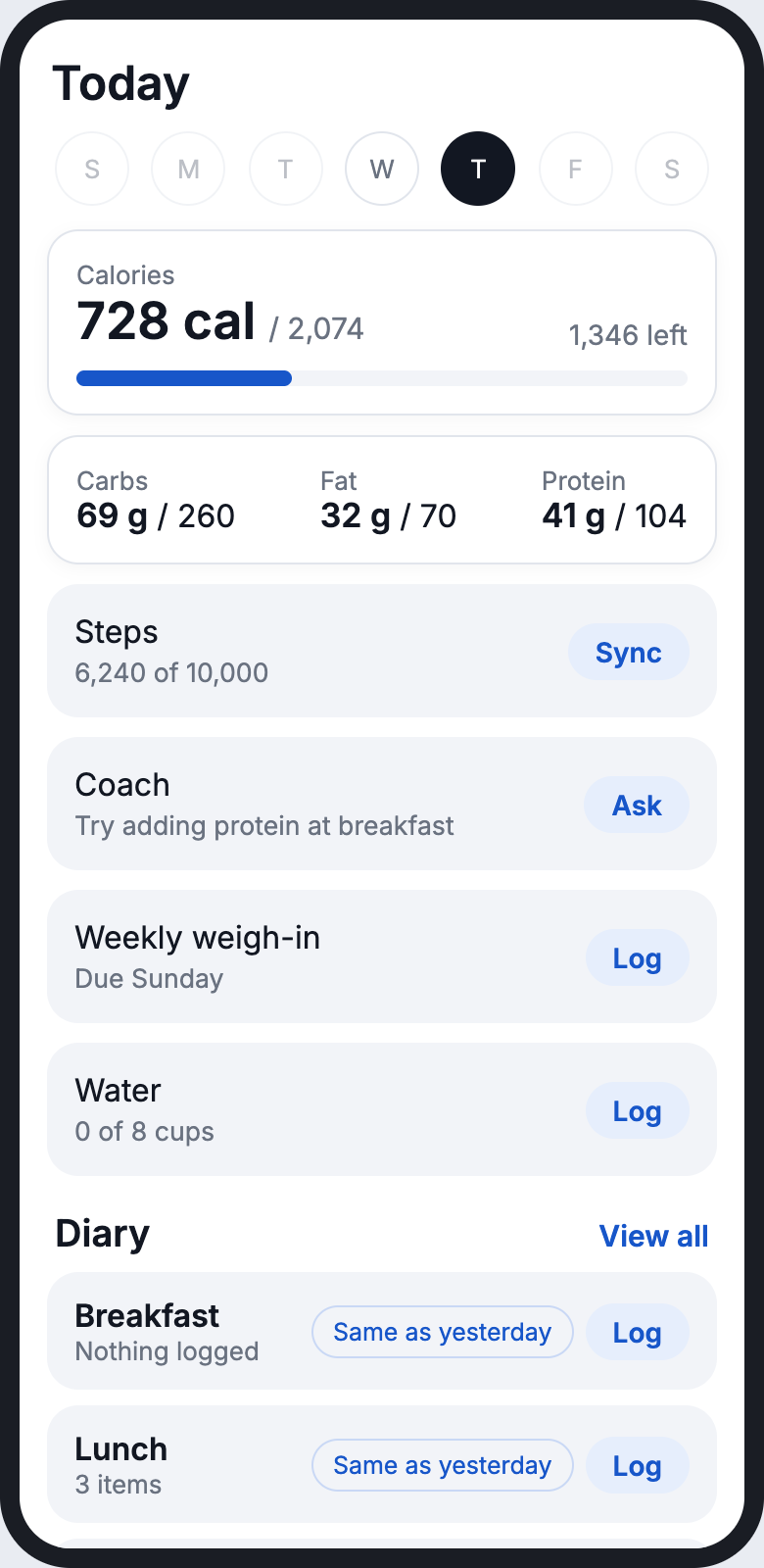
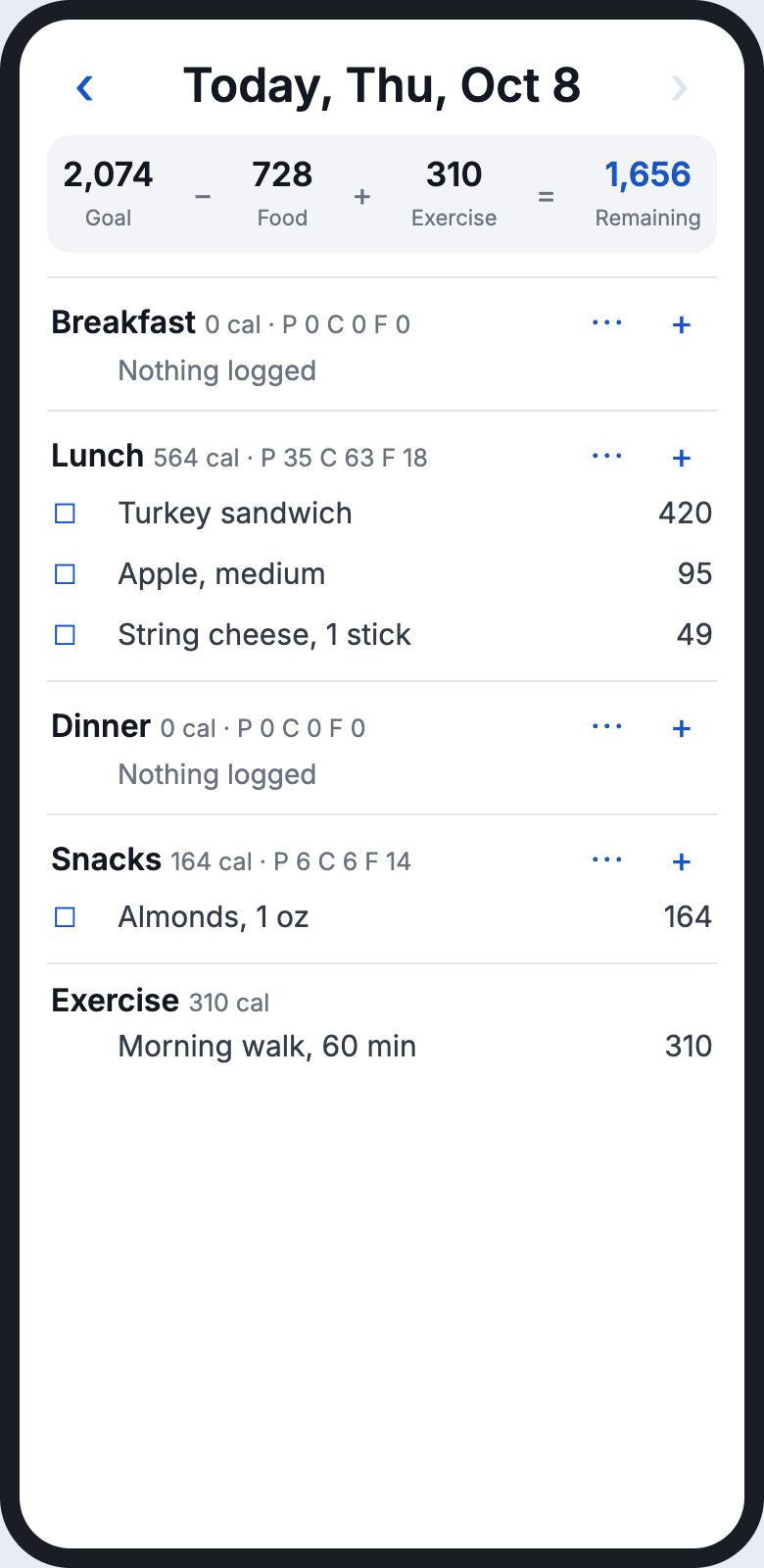
| Review today's lunch and its total | 1 tap | 0 |
| Calories left (exercise included) | 1 tap* | 0 |
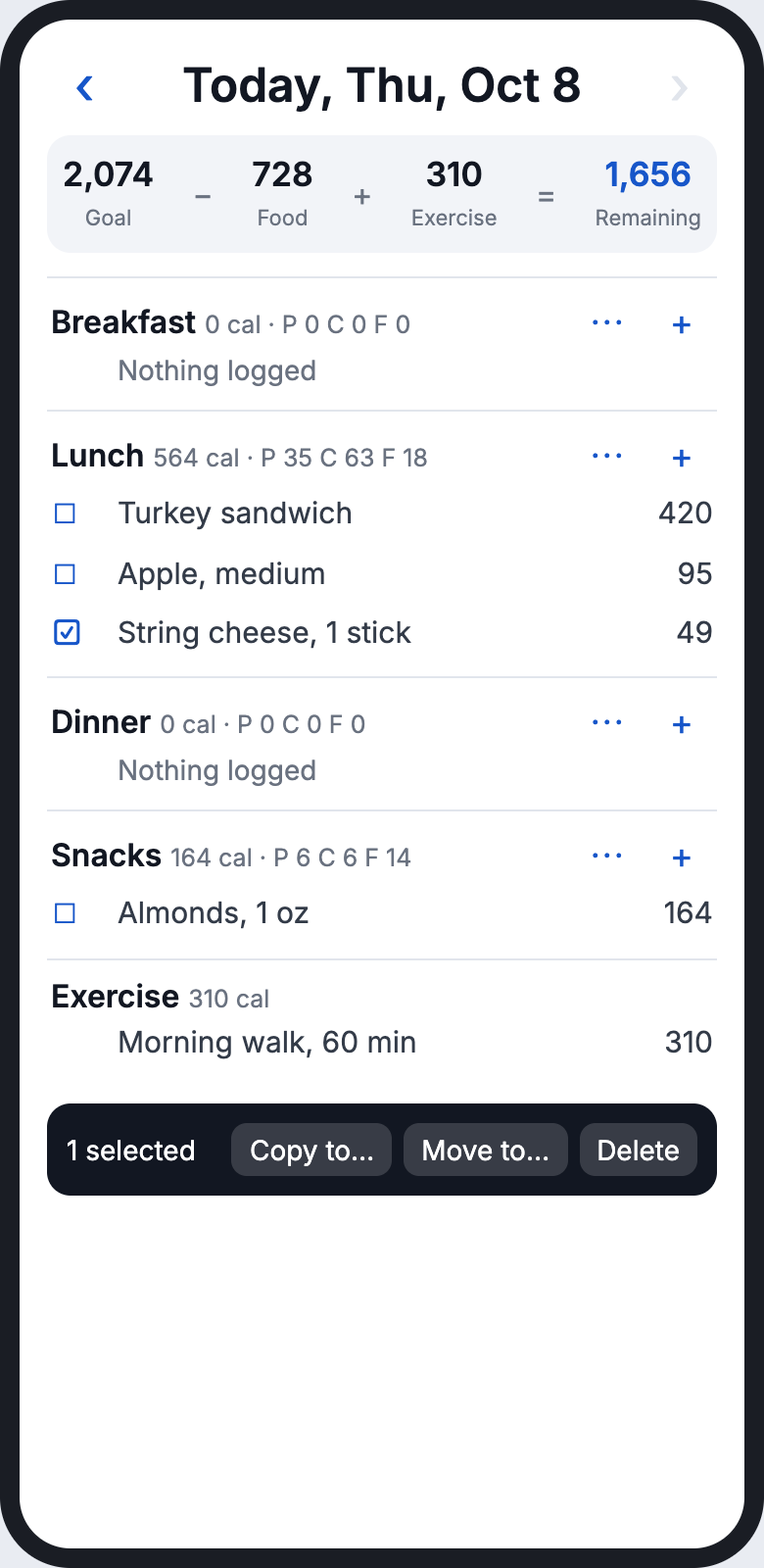
| Copy yesterday's breakfast | 1 tap | 2 taps |
| Move an item from Lunch to Snacks | 5 taps | 4 taps |
| Check yesterday's dinner | 2 taps | 1 tap |
| Undo a wrong copy | 7 taps† | 4 taps |
In a task that should change nothing, 4 of 19 possible first taps change the food log on Today, 0 of 13 on the compact view. The same one-tap copy chip makes copying faster on Today.
* In the reconstructed Today test case, the displayed figure at zero taps is 1,346, compared with the exercise-adjusted value of 1,656. The agent quotations elsewhere use the second matched food log, which has different values. † A separate scripted route established seven taps as an upper bound because the exhaustive search reached its exploration limit.
Breadth-first search over the two implemented prototypes identifies the shortest routes established under the task rules. Rendered content counts as available without additional interaction. These results are not measures of human task time or effort. The reconstructed Today baseline has not yet been verified against the live application.
Baseline validation and proposed human study
Fielding plan
Decision rule, set in advance
Support the compact view if the study finds lower effort and improved accuracy on the relevant tasks without a consequential decline in comprehension. Evaluate differences in copying and moving separately rather than requiring improvement on every task. If accidental copies are too rare to estimate in twelve sessions, assess that risk through additional targeted testing before making a decision based on it.
The rehearsal tested the study, not the users. It caught a task that pointed people to the answer, a wording that let someone succeed by doing the wrong thing, and an error hypothesis that synthetic participants could not test, all before anyone was recruited.
Appendix
Open the study materials: Try the prototype (moderator mode) · Protocol v2: screener, tasks, moderator guide · What the rehearsal changed
Matched sessions by task (synthetic, v1 tasks)
Same persona and task in both conditions. Synthetic participants: evidence about the protocol, not about users. Total model cost $.
Planted predictions, written before any session
The other six protocol changes
Refused sessions ():